
Fear of Missing Out Once Again

Imagine telling a proud Italian celebrating their World Cup victory in 2006 that their national team would struggle to advance past the group stage for nearly two decades; they would likely scoff in disbelief. Fast forward eight years after the disappointing exit in the 2014 World Cup group stage against Uruguay, and it would have sounded absurd to state that the Azzurri wouldn’t qualify for the following two tournaments. Yet, here we are. Finishing behind Norway in their qualification group for the upcoming 2026 World Cup, Italy finds itself at risk of yet another absence from the tournament.

Norway dealt a heavy blow to the four-time World Cup champions with a 4-1 victory at the San Siro on Sunday night. Consequently, Italy’s second-place finish means they must now enter the playoffs, a stage that has brought them embarrassment in recent years. Just look back to 2018 when they failed to qualify after losing 1-0 on aggregate to Sweden and the humiliation of being knocked out at home by North Macedonia in 2022. It’s now been over a decade since Italy last featured in a World Cup, and the squad looks vastly different from the one that played in 2014.
The Italy XI from Their Last World Cup Match in 2014
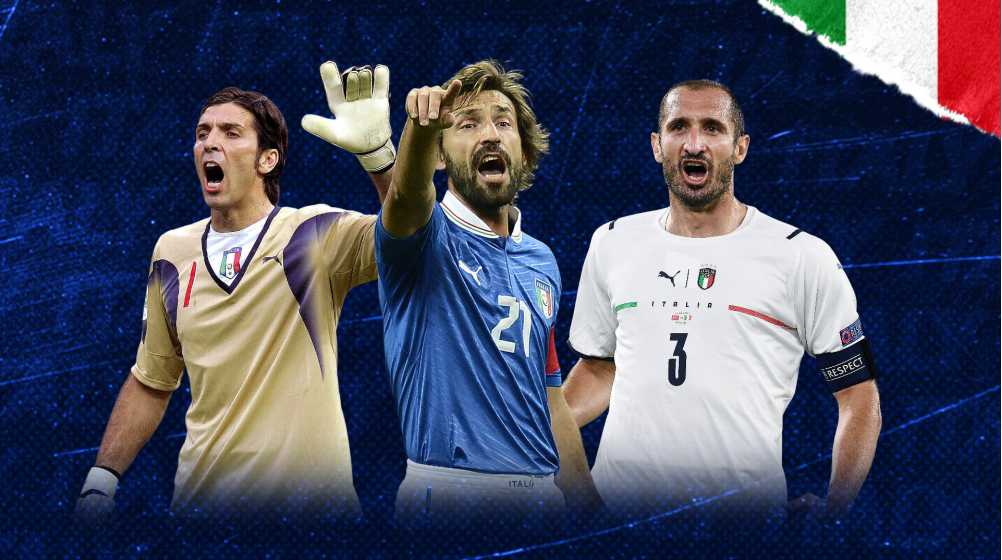
Italy’s last World Cup match is mainly remembered for the notorious ‘bite-gate’ incident in which Uruguay striker Luis Suárez bit Italian defender Giorgio Chiellini and received a lengthy ban. However, Uruguay won the match 1-0, resulting in both Italy and England exiting from Group D. On that day, the Italian line-up featured a mix of emerging talents and seasoned veterans, including two players from the 2006 World Cup-winning squad. Gianluigi Buffon, a legendary goalkeeper, stood between the posts, supported by a defensive trio comprised of his Juventus teammates.

Leonardo Bonucci, Andrea Barzagli, and Chiellini anchored the defense, while the midfield saw the experienced Andrea Pirlo, aged 35, paired with 20-year-old Marco Verratti. Matteo Darmian and Mattia De Sciglio lined up as wing-backs, with Claudio Marchisio providing creativity in attacking midfield. Up front, Ciro Immobile partnered with the dynamic Mario Balotelli. That starting XI had an estimated market value of €173 million and an average age of 27.8 years, yet the aging nature of the squad foreshadowed difficulties ahead.
What Went Wrong in Italian Football?
Stefano Buonfino, an expert from Transfermarkt, expressed disbelief when asked if he could have imagined Italy failing to qualify for the last two tournaments back in 2014. He stated, “No, despite worries regarding Italy’s performance, I didn’t foresee such a dire situation.” The root of the problem, according to Buonfino, lies in how youth teams are structured in Italy. He argues that many youth coaches prioritize winning over player development, focusing too little on technique and too much on tactics. This tendency favors physically dominant players who excel at the youth level because of their size, pushing aside more technically gifted players who may not be as developed physically.

When Italy triumphed over France in the 2006 World Cup final, they boasted a team brimming with talent, invoking strong nostalgia for fans of that era. Buonfino lamented, “Today, finding players of the caliber of Francesco Totti, Alessandro Del Piero, and Roberto Baggio is a challenge.” While Italy has a reputation for defensive strength, the past featured incredible attacking players that balanced the squad. Presently, the Italian team struggles on both ends of the pitch, with teams like Norway overtaking them in talent. Buonfino emphasizes that reforms are essential, but the focus should be on youth systems and Serie A rather than just the national team or changing coaches. There needs to be a renewed emphasis on teaching technical skills to young players and giving them the confidence to participate in first-team competitions at a younger age.

Nevertheless, despite the challenges in the World Cup, Italy has fared better in the European Championships. The Azzurri reached the final in Euro 2012 and then celebrated victory in Euro 2020, defeating England at Wembley. However, Buonfino warns that this continental success could be masking underlying issues. “Absolutely,” he confirms. “The success derived from the team effort rather than standout individual players. Italy was not the favorite; they were the underdog with a rich history. Their management and strong goalkeeping led to an unexpected success that seems hard to replicate with the current squad.” If Italy fails to qualify for a World Cup expanded to 48 teams, it would undoubtedly mark one of the greatest embarrassments ever. Despite expectations, their journey to qualification has not been straightforward.