
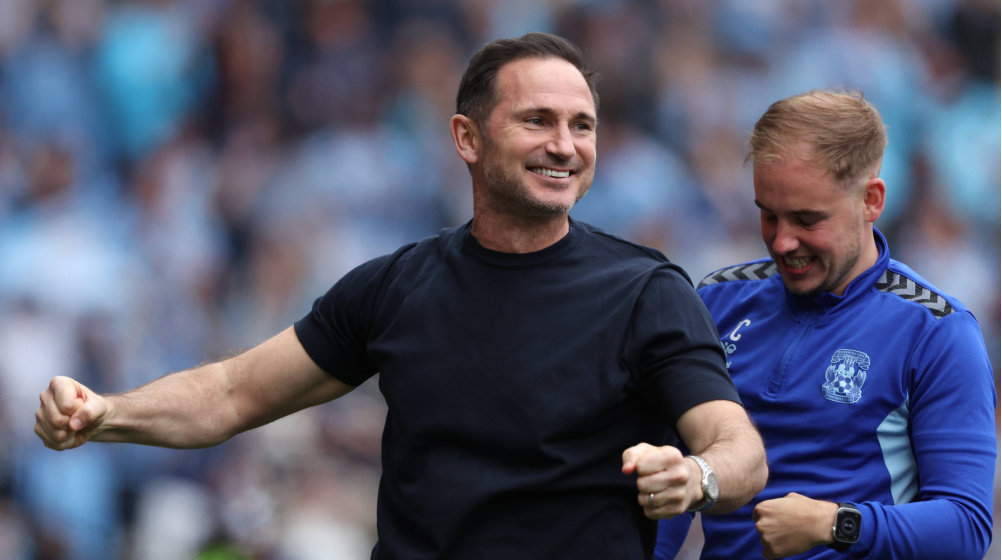
50 matches, 28 victories

As we enter the November international break, it’s the final opportunity this year for analysts to compare England’s current team with its notable predecessors ahead of next year’s 2026 World Cup. This discussion is warranted, especially since Thomas Tuchel’s squad maintains an undefeated record in their FIFA World Cup qualifying campaign, recently securing a 2-0 victory against Serbia without conceding a single goal. With players like €180 million-rated Jude Bellingham struggling to get into the lineup, it’s arguable that we may be witnessing England’s most talented generation to date. However, the previous ‘Golden Generation,’ which included stars like Frank Lampard and Steven Gerrard, may dispute that claim, boasting an impressive roster of talent during their era.
Player Comparison
Central Midfield
Position
Central Midfield
Full Player Comparison
England’s Golden Generation
Under the late Sven-Göran Eriksson’s leadership, England reached the quarter-finals of three major tournaments consecutively — the 2002 World Cup, Euro 2004, and the 2006 World Cup — but faced elimination each time in the quarter-finals. Steve McClaren’s era saw a tumultuous Euro 2008 qualifying campaign during which England failed to qualify. In the 2010 World Cup, Fabio Capello’s squad fell in the Round of 16. The ongoing narrative about the ‘Golden Generation’ created immense pressure on the players due to soaring expectations from fans and media. This burden may have also impacted their subsequent managerial careers. Now in their mid-40s and 50s, several players have navigated the ups and downs of management, but their influence from the sidelines hasn’t been as impactful.
What are England’s Golden Generation doing now?
The list of those who have transitioned to management isn’t extensive given their prominence. Many members have transitioned into punditry for parts or all of their post-playing careers, with Jamie Carragher, Gary Neville, Paul Scholes, Rio Ferdinand, and Michael Owen frequently appearing on TV. Others have taken on lower-profile coaching roles; John Terry has had difficulty finding a managerial position that aligns with his ambitions despite a stint as an assistant at Aston Villa, while Ashley Cole has served as an assistant at Chelsea, Derby, and with the England Under-21 team. Neville and David Beckham have also ventured into club ownership with Salford City and Inter Miami, respectively. Conversely, Lampard and Gerrard are the two former players to have achieved relative success both on and off the pitch, with Lampard currently enjoying a strong start to his campaign with Coventry City.
Lampard revitalizing Coventry
Lampard’s Coventry team sits five points clear at the top of the Championship standings, boasting 34 points from 15 matches with 40 goals scored and only 13 conceded. The Sky Blues previously flirted with promotion under former manager Mark Robins, but under a rejuvenated Lampard, their ascent appears more promising with each passing game. Celebrating his 50th match in charge with a 1-0 victory over fellow promotion contenders Stoke City, Lampard has won 29 of those matches since taking the helm. After a challenging period at Derby and Chelsea, coupled with a challenging brief as interim manager at Everton, Lampard has found a suitable environment at Coventry where he can hone his skills away from the intense pressures of Premier League management. If he can guide Coventry back to the top flight for the first time in 25 years, his prior experiences will have equipped him well for the journey.
Gerrard at the helm
Among England’s Golden Generation, only Gerrard (1.82) holds a better overall points-per-game record than Lampard (1.55). The Liverpool icon progressed through the coaching ranks at his childhood club, serving as an academy coach and then Under-18 manager, before enjoying a successful tenure at Rangers, where he clinched the Scottish Premiership in the 2020/21 season. However, his more recent roles at Aston Villa and Al-Ettifaq have not yielded positive results. His points-per-game average drops to 1.26 when factoring in his 95 matches at these two clubs, which partly explains why he remains without a position since exiting the Saudi Pro League in January 2025. In a comparable analysis, Lampard’s last 95 games as a manager resulted in an average of 1.47 PPG, excluding an unfortunate interim spell at Chelsea where he achieved two wins in 11 matches. Even accounting for that, his PPG (1.36) remains higher than Gerrard’s during the same timeframe.

Rooney’s recent downturn
While Lampard and Gerrard maintain respectable managerial records, the same cannot be said for many of their former teammates. Wayne Rooney’s foray into coaching began promisingly at Derby County and continued at D.C. United. However, the 39-year-old’s recent tenures with Plymouth Argyle (0.84 PPG) and Birmingham City (0.67 PPG) have severely tarnished his reputation. Gary Neville’s tenure at Valencia spanned 28 matches, yielding a 1.32 PPG record at the Mestalla, while his brother Phil Neville has had mixed results managing Inter Miami and Portland Timbers in 171 MLS matches.
Other members of that illustrious squad who have taken on managerial roles include Scholes and Sol Campbell. Scholes oversaw a challenging stint at Oldham Athletic (0.87 PPG) and left after just seven matches, while his time at Salford City was more fruitful (1.75 PPG). Meanwhile, Campbell faced tough challenges managing at Southend United, where he encountered relegation to the National League, and Macclesfield Town, whom he managed to maintain in the EFL.
Will Lampard or Gerrard become England’s future manager?
For various reasons, many members of England’s ‘Golden Generation’ have struggled to find stability in management. However, prospects for change exist, especially with Lampard’s resurgence at Coventry and Gerrard’s success at Rangers. Gerrard has expressed a desire to take on new challenges: “There’s a part of me that still feels there’s some unfinished business and would love to take on a couple of exciting challenges. Ideally, I am looking for the right type of challenge. If they come available, I’ll jump at them. If not, I won’t rush back in.”
Should the chance arise in the future, either Lampard or Gerrard could potentially rewrite the narrative of the ‘Golden Generation’—this time from the managerial sidelines.