
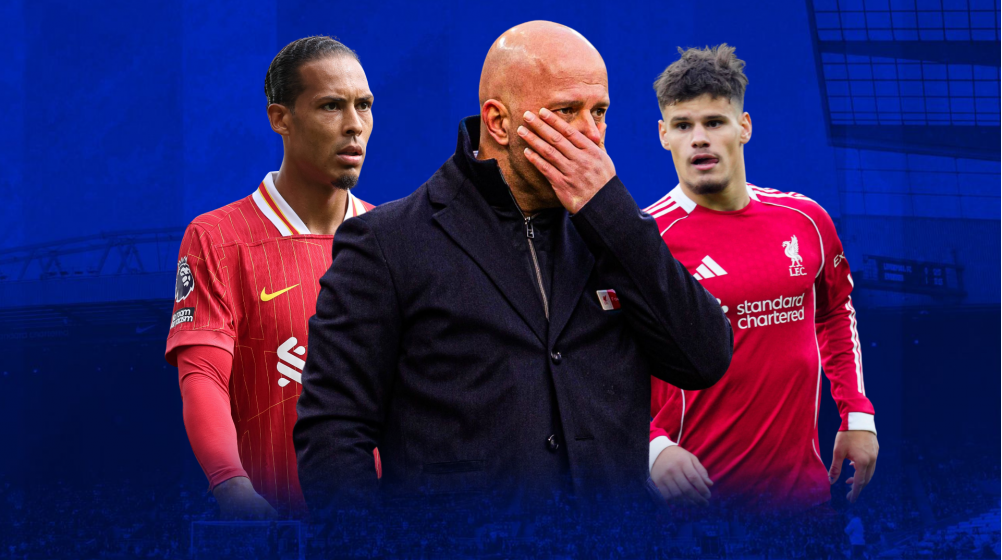
6 defeats in 7 matches

While there are several intriguing Premier League fixtures for fans to enjoy this weekend, the spotlight will undoubtedly be on Liverpool’s showdown with Aston Villa at Anfield on Saturday evening. The English champions are reeling from four consecutive league defeats and were eliminated from the League Cup by Crystal Palace on Wednesday. Under intense scrutiny from supporters and media, Arne Slot made the controversial decision to heavily rotate his squad, fielding many players from the youth teams. His post-match reaction to Palace’s relatively easy victory was telling.
“Looking ahead to the coming week, it’s crucial for us and the club,” the Dutch coach told BBC Sport. “We need as many players available as possible, which is evident from today’s lineup. I only rested players who have been heavily involved lately. This reflects our current injury situation. With a big week ahead, I felt this was the best approach.” While Liverpool has a history of utilizing young talent in the League Cup, it’s clear that Slot is doing all he can to prepare for an increasingly vital match for the club. So what has gone awry this season for Liverpool?
A shift in performance on both ends of the pitch
During the summer transfer window, Liverpool splurged €483 million on new signings, with €365 million directed towards offensive players like Alexander Isak, Florian Wirtz, and Hugo Ekitiké. Unsurprisingly, much of the club’s struggles this season have been attributed to the underwhelming performance of these new arrivals, compounded by a dip in form from star player Mohamed Salah. Salah has managed just three goals and two assists in nine Premier League matches, while the newly signed trio has recorded only five combined goals and assists in their 21 league appearances. However, this may not fully explain Liverpool’s recent decline.

Analyzing the club’s offensive and defensive statistics across all competitions this season reveals that Slot’s team is averaging 2.0 goals per game. This is a slight decrease from last season’s average of 2.2 goals and is the joint worst for Liverpool in the past five seasons, yet it’s still a respectable figure. The real concern lies in their defensive woes, with the team conceding an alarming 1.8 goals per game, marking the worst average they’ve recorded in five years. While their attacking output has dropped by just 9%, the goals allowed per game have surged by a staggering 64%.
In football, team dynamics mean that these fluctuating statistics are interconnected. Liverpool’s defensive struggles are partially a result of their failure to dominate matches in the attack as they once did. Coupled with the underperformance of key defenders like Ryan Gravenberch in midfield and Virgil Van Dijk at the back, as well as the team’s effort to replace influential full-backs Andy Robertson and Trent Alexander-Arnold, it becomes evident that the summer’s player turnover has had a more significant impact defensively than offensively.
Liverpool’s defense lacks its former attacking prowess
Looking at Liverpool’s flagging defense from another perspective, it’s crucial to consider its attacking contributions. This might seem counterintuitive when assessing a defensive line, but Liverpool’s success in recent years has heavily depended on the attacking abilities of full-backs Robertson and Alexander-Arnold, as well as the aerial prowess of Van Dijk. Whether due to Van Dijk’s declining form or the inability of new recruits to effectively replace the full-back duo, Liverpool’s ability to threaten opponents has significantly diminished.

This season in the Premier League, Liverpool’s defenders have collectively contributed merely two goals and assists in the first nine matches, marking the second-lowest tally among all top-flight teams. This only accounts for 7% of Liverpool’s total attacking output. In contrast, last season, their defense contributed 13% of total goals and assists and boasted the second-most fruitful defensive output in the Premier League. As illustrated in the graph, Liverpool’s dependency on attacking full-backs has been declining season after season, likely due to Robertson aging and Alexander-Arnold’s potential distractions regarding a move to Real Madrid. However, the bigger concern is that Liverpool’s new full-backs have not proven capable of filling the void left by their predecessors.
On the left, new signing Milos Kerkez has shown defensive vulnerabilities, contributing just one goal and no assists in nine league matches. Similarly, right-side recruit Jeremie Frimpong has started only one league game, with Slot frequently opting for young player Conor Bradley or midfielder Dominik Szoboszlai in the right-back position. Together, they’ve managed just one goal and one assist from their right-back roles so far. Additionally, failing to secure a deal for Marc Guéhi in the summer has left Liverpool without a competent backup for Van Dijk in defense.
This isn’t to say that Liverpool lacks the talent necessary to reverse their poor start to the season. Kerkez, Frimpong, and Bradley are undoubtedly promising players. Yet, it’s evident that Slot has yet to strike the right balance within the team, resulting in a failure to perform effectively on both offense and defense. Unless he can find that balance against Villa this Saturday, Liverpool’s struggles on the pitch are likely to continue.